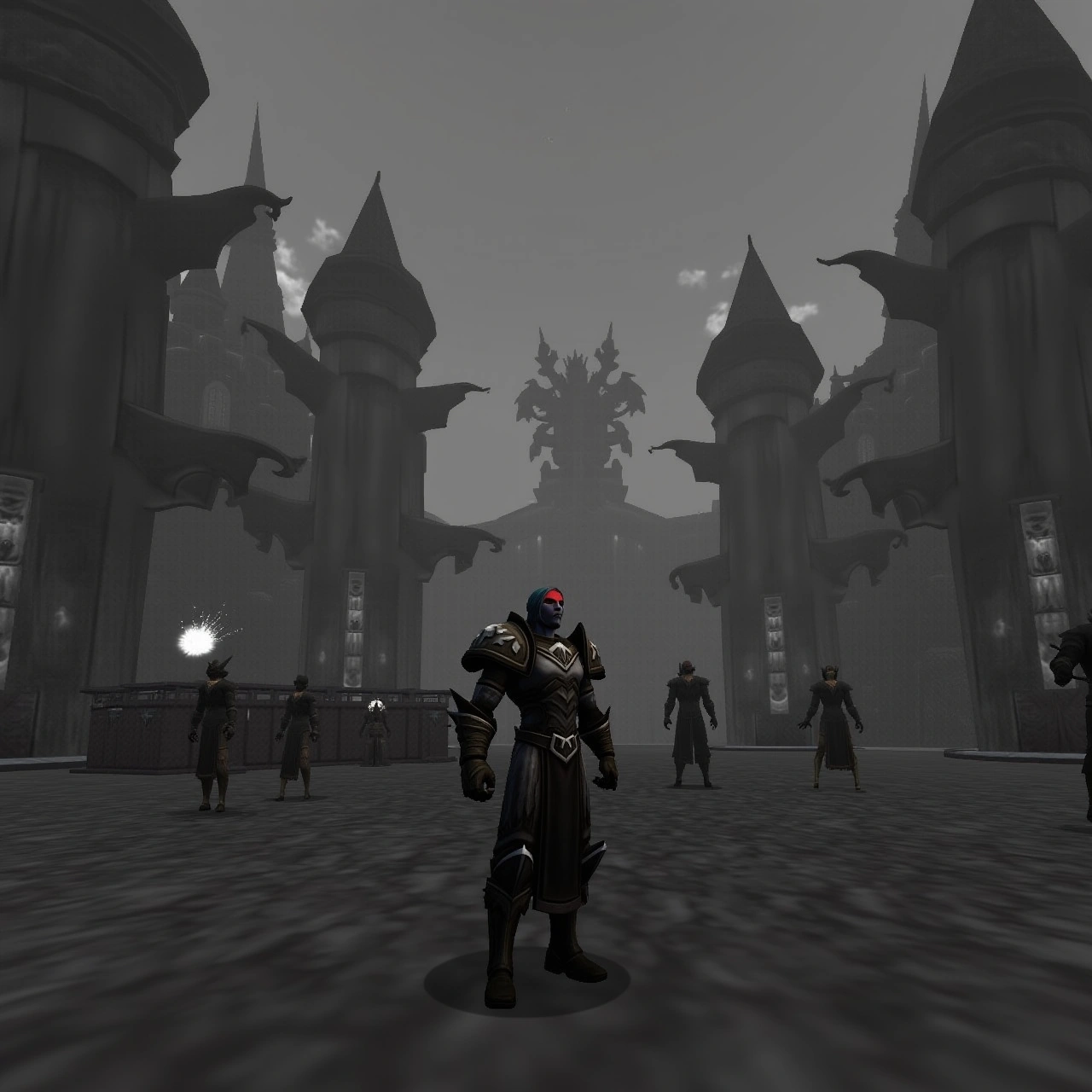
New player asks what World of Warcraft is
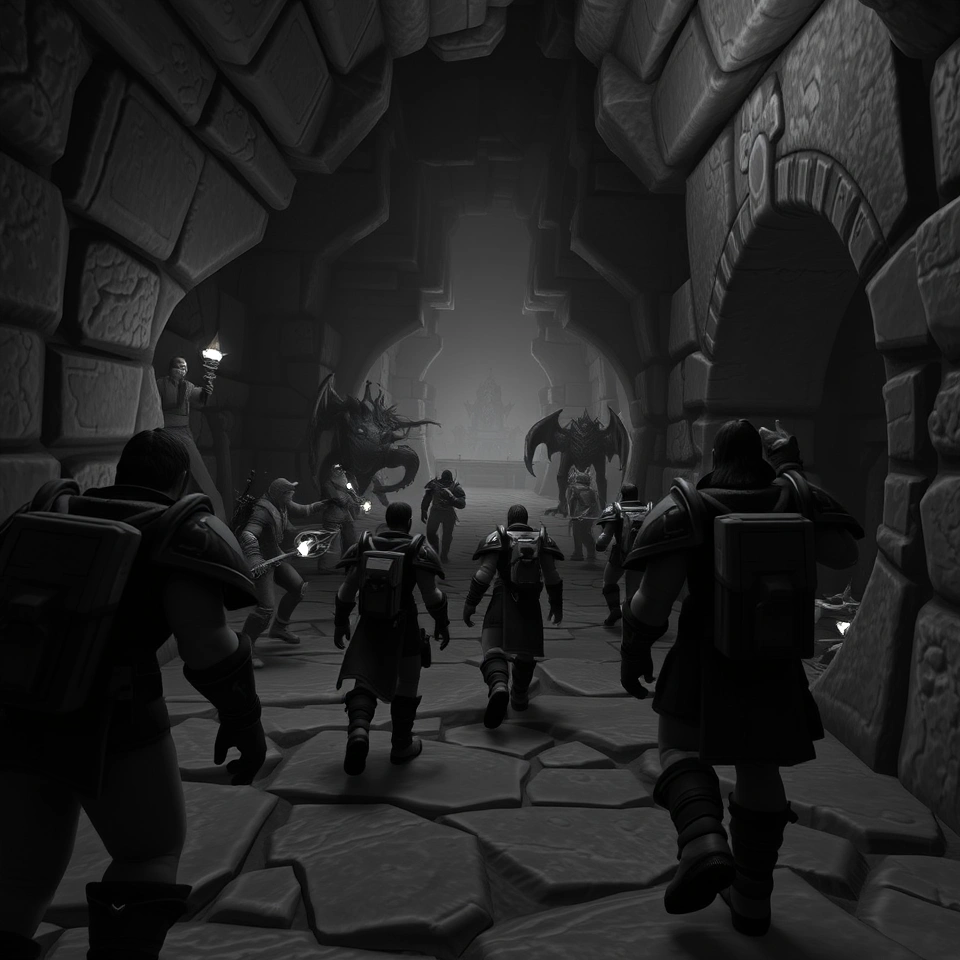
World of Warcraft is a massively multiplayer online role-playing game set in the fictional world of Azeroth, where players create a character, pick a race and class, and adventure alongside thousands of other players in the same persistent world — a structure Blizzard has run continuously since the game's original launch, as Wikipedia's overview of the game describes. At creation you choose a race — human, orc, night elf, tauren, and others added over the years — and that choice locks in your faction, either the Alliance or the Horde, along with your starting zone.
From there, progression follows a fairly fixed order:
- Questing — solo or small-group content that takes a new character from the starting zone through the current expansion's leveling path.
- Dungeons — small-group instanced content, unlocked partway through leveling and central to gearing up once you reach the level cap.
- Raids — larger group content that forms the endgame for guilds and organized groups, with well-known instances such as Black Temple sitting at this tier.
Access to all of this beyond a limited trial requires an active subscription. Blizzard's own World of Warcraft site lists what the current expansion includes and what the recurring subscription fee covers, billed monthly at whatever rate is posted there for your region at the time you sign up. The trial lets newcomers try character creation and early questing, but continuing past the early levels and into dungeons, raids, and the higher-level zones requires paying to keep the account active.
Player is unsure which version to play
The choice comes down to whether you want the game's current, actively developed content or a fixed slice of its history. Blizzard runs two parallel products under the same subscription: modern World of Warcraft and WoW Classic.
Modern WoW is the live, ongoing game — it runs the current expansion cycle and receives new seasons and patches on a rolling basis. WoW Classic, by contrast, re-releases specific past versions of the game in sequence — Blizzard's Classic page describes rotations through expansions such as The Burning Crusade and Mists of Pandaria, each played through as it originally existed, raids and all.
| Modern WoW | WoW Classic | |
|---|---|---|
| Content pace | New seasons and expansions on an ongoing cycle | Fixed historical expansions, released in sequence |
| Endgame example | Current-tier raids and dungeons tied to the live season | Older raids such as Black Temple, run largely as originally designed |
| Best suited to | Players who want the current story and gearing loop | Players who want a specific past era of the game |
| Subscription | Same subscription covers both | Same subscription covers both |
If what draws you in is a specific raid you've heard about by name — Black Temple from The Burning Crusade era is a common example still featured in Classic's rotation — Classic is the version that has it. If you'd rather be where the story and rewards are still moving forward, modern WoW is the one built for that.
Player returning after a break asks if the game is still worth playing
That question only has a useful answer once you know what's currently running. World of Warcraft is a live-service game, which means its content arrives in overlapping cycles rather than as one static product: expansions every few years, seasons within an expansion that reset dungeon and raid rewards on a shorter timer, and occasional anniversary events layered on top, a structure Wikipedia's article on the game traces from launch through its later expansions.
What that means practically for a returning player: the raids and dungeons worth doing right now depend entirely on which expansion and season is currently live, not on what was live when you quit. Rewards, difficulty tiers, and even which zones are relevant to end-game characters get replaced with each season change.
Before resubscribing, the concrete thing to check is Blizzard's own patch and news feed, which lists the current season, the active raid tier, and any time-limited event running alongside it. That tells you whether what's live matches what you're looking for, rather than relying on a general sense that the game is "still going."
Azeroth
Azeroth is the fictional world the entire game takes place in — every zone, city, and raid instance across every expansion is part of it, even when an expansion's story moves the action to a moon, a parallel dimension, or a different plane layered on top of it. It's the setting rather than a single map: Icecrown, the Barrens, and Black Temple's location in Shadowmoon Valley are all part of the same continuous world rather than separate games. For players trying to orient themselves geographically — where a given zone sits relative to others, or which continent an expansion's new content is attached to — fan-made map resources like World of MapCraft and community references such as Warcraft Wiki catalog zones and their locations in more detail than any in-game view. Players who enjoy testing their own sense of the world's geography have also built location-guessing tools such as Where in Warcraft, built specifically around Azeroth's zones.
Midnight
Midnight is the name of the next expansion, and it was revealed at BlizzCon, Blizzard's annual convention where the company has historically made its biggest announcements about upcoming expansions, features, and roadmap changes in front of a live audience. It's the venue, not a content patch — attending or watching its streamed panels is how players first hear about things like Midnight before any patch notes exist for them. As with any expansion still in development, concrete details — release date, specific zones, level cap changes — are subject to change before launch, and the most current information sits on Blizzard's official news feed rather than in early announcement coverage. For a player deciding whether to resubscribe now or wait, the practical distinction is between the current live season (playable today) and Midnight (announced, but not yet released) — subscribing now gets you the former, not a preview of the latter.
Dungeon
A dungeon is small-group instanced content, and it sits between solo questing and full raids in both difficulty and reward. Dungeons are usually the first group content a leveling character encounters, and at the level cap they become the main gearing tool through repeatable difficulty tiers that scale rewards up as the group's performance improves.
Within a season, the dungeon pool is usually a rotating set of instances designated for higher-difficulty, timed runs, refreshed each season rather than left static — which is part of why checking the current season's dungeon list, via Blizzard's own news page, matters more than remembering which dungeons mattered in a previous one. A group that clears the current season's dungeon rotation efficiently is usually the fastest route into raid-ready gear, ahead of relying on solo questing alone.
If you're deciding where to start today, the fastest path is: confirm which season is currently live on Blizzard's news feed, pick modern WoW or Classic based on whether you want current content or a specific past raid tier, then create a character and queue into the dungeon rotation that season provides.